The problem this solves
Concepts convince nobody. Working software changes conversations.
When stakeholders can interact with an AI prototype that processes their actual data and produces a real output, the questions shift from “should we do this?” to “how fast can we scale it?” The Prototype Sprint exists to create that moment.
This is not a hackathon. It is a facilitated build session with a clear specification, the right infrastructure, and an experienced engineer driving. By end of day, you have deployed, running software.
Who this is for
You have an approved use case and a Concept Sprint spec. You need working code on AWS, deployed and demo-ready, by end of week, not end of quarter.
You'll be building alongside an experienced AWS AI engineer. The session moves fast and produces real code your team inherits, understands, and can extend.
You need a live demo for the board meeting next week. The Prototype Sprint produces exactly that, working software on real data, with a documented handover package.
How it runs
The architecture you get
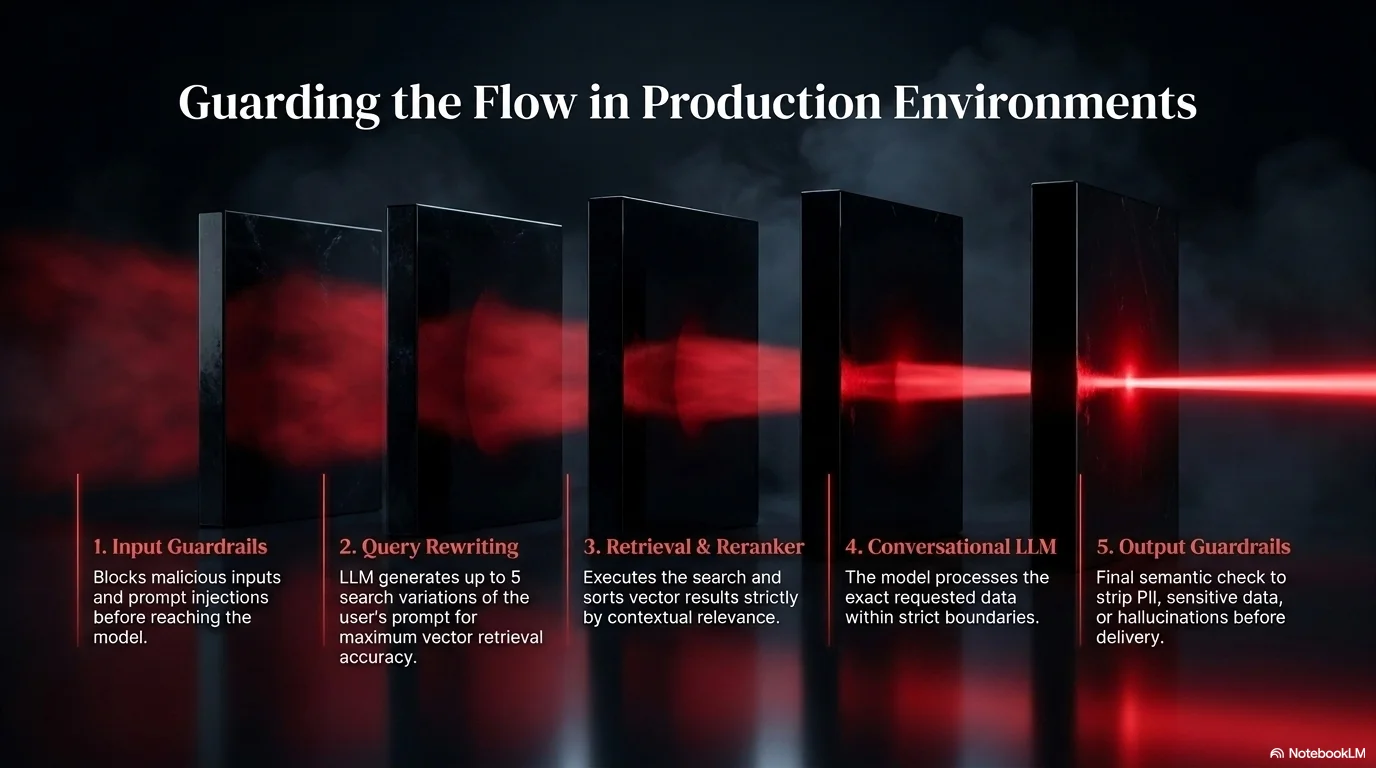
This is a representative production-ready prototype architecture for an AI assistant or document intelligence system, the pattern adapts to the specific use case but the structure is consistent:
For multi-agent use cases, AWS Step Functions orchestrates agent workflows. For RAG (retrieval-augmented generation) systems, Amazon OpenSearch stores document embeddings. For real-time processing, Kinesis handles streaming data. The architecture is always AWS-native and designed to be extended to production without a full rebuild.
Prototype sprint vs. a hackathon
The Prototype Sprint is often compared to a hackathon. The difference matters.
What “working prototype” actually means
A working prototype, as defined by this sprint, meets all of the following criteria:
- Processes real data from your organization (not synthetic examples)
- Returns accurate, structured outputs for at least the primary use case
- Is deployed in a real AWS account, not running on a laptop
- Can be demonstrated live by someone who was not involved in building it
- Includes basic error handling and a documented deployment process
It is not a polished product, it will have rough edges and hardcoded assumptions. That is intentional. Its job is to prove the concept and unlock the next phase of investment, not to ship to customers.
The roadmap to production
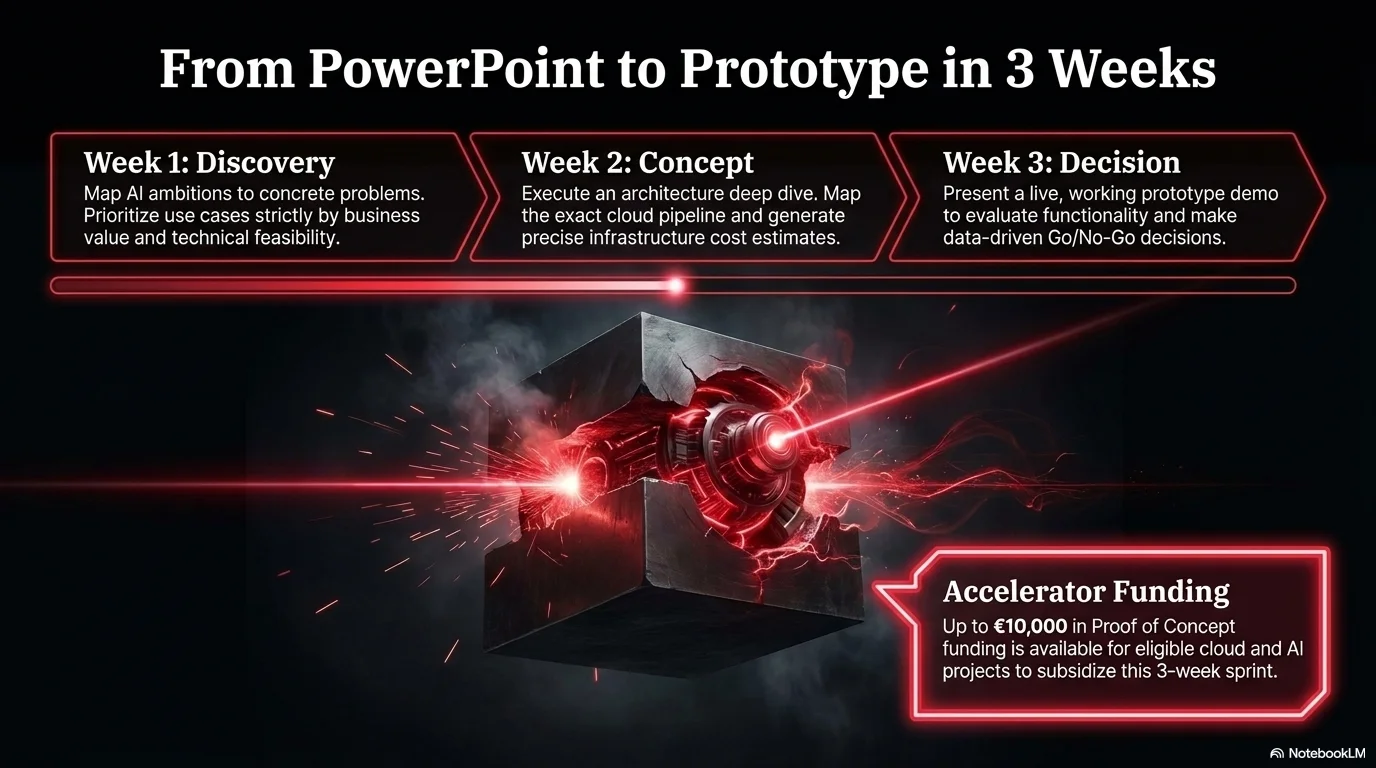
The implementation roadmap delivered at the end of the sprint maps the path from prototype to production.
Replace hardcoded values with configuration, add proper error handling, logging, and monitoring, set up a CI/CD pipeline, and complete a security review.
Test with representative data volumes, tune model performance and latency, validate cost model at scale, and identify infrastructure optimizations.
Connect to production data sources and downstream systems. Timeline depends heavily on the complexity of existing integrations and internal procurement processes.
Staged rollout with observability tooling, monitoring dashboards, alerting, and a runbook. Organizations typically reach production pilot in 6–12 weeks post-sprint.
"The 3-workshop format gave us a working prototype in under a month. We went from vague AI ambitions to a funded PoC with a clear implementation plan. Exceptional facilitation."

By the end of the day, the team has a prototype, a path to production, and a funded route to keep going.
Frequently asked questions

The Prototype Sprint is the workshop where ‘we should try AI’ becomes ‘we have AI running’.