How to Prioritize AI Use Cases: From 57 Ideas to 3 Prototypes
The Problem with AI Strategy Sessions
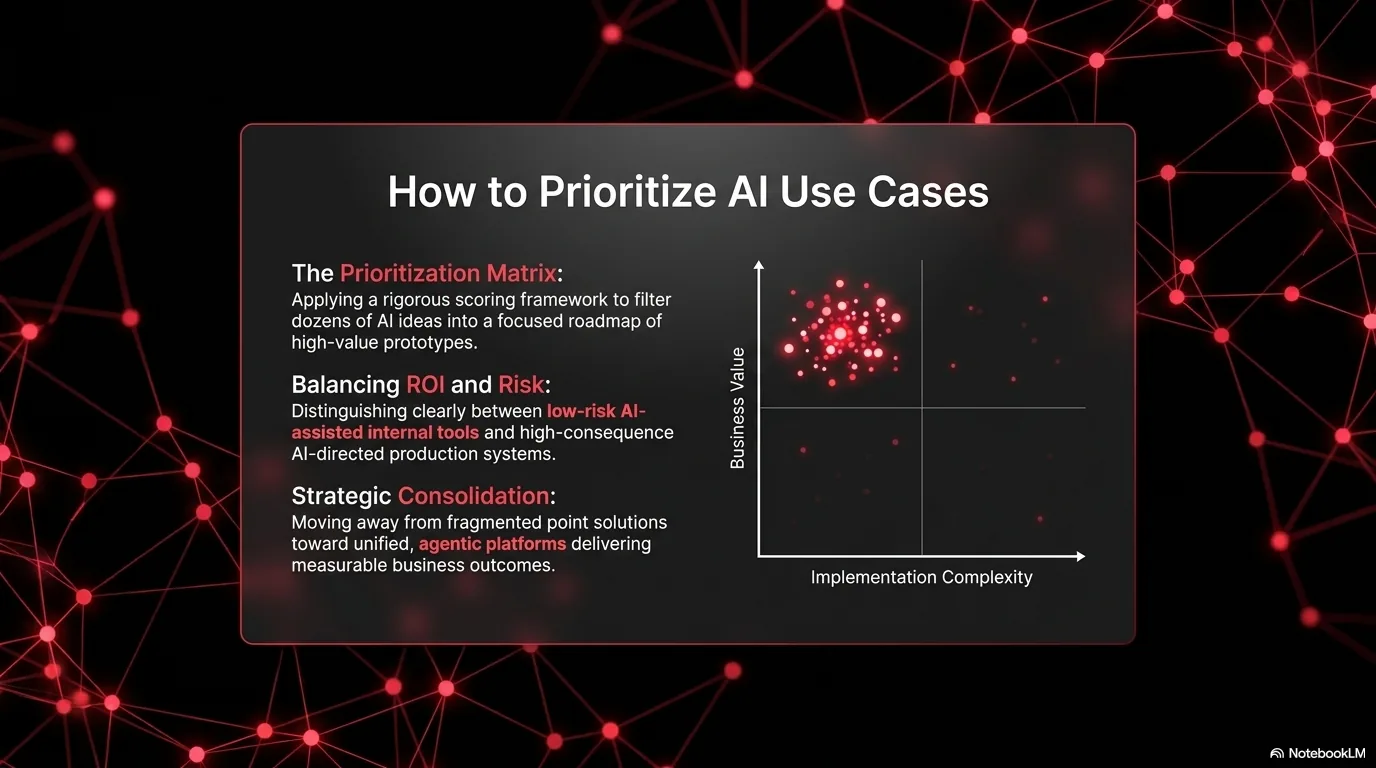
Organizations generate AI ideas easily. A single strategy workshop can produce 40-80 potential use cases. The problem is what happens next: the list sits in a slide deck, no one can agree on where to start, and six months later the organization is back to square one.
The bottleneck is not imagination. It is prioritization.
The Framework
The scoring approach used in AI opportunity workshops draws on two complementary methods: Weighted Shortest Job First (WSJF) from SAFe, and opportunity scoring from product discovery.
Opportunity Score
Each idea is scored on two axes:
- Importance: How important is solving this problem to the business? (1-10)
- Satisfaction: How well are existing solutions solving it today? (1-10, inverted - low satisfaction = high opportunity)
Opportunity Score = Importance + (Importance - Satisfaction)
High-importance problems with poor current solutions score highest.
WSJF (Cost of Delay / Effort)
For the top-scoring opportunities, we apply a cost-of-delay calculation:
- Business value - Revenue impact, cost reduction, risk mitigation
- Time criticality - Does this matter more now than in 6 months?
- Risk reduction - Does solving this reduce significant strategic risk?
- Effort - How long will it take to build a prototype and validate?
WSJF = (Business Value + Time Criticality + Risk Reduction) / Effort
The highest-ratio items get built first.
Data and Infrastructure Readiness
Even high-scoring use cases can’t move forward if the underlying data doesn’t exist or isn’t accessible. A readiness check covers:
- Data availability - Is the required data being captured today?
- Data quality - Is it accurate and consistent enough for AI?
- Access - Can a prototype team access this data in a reasonable timeframe?
- Regulatory - Are there data protection or compliance constraints?
What the Output Looks Like
After a 3-4 hour prioritization workshop, the output is a structured list:
- Tier 1 (Build now): 2-3 use cases with high scores, high data readiness, clear business owner, and a defined prototype hypothesis
- Tier 2 (Build next): 3-5 use cases ready to enter the queue once Tier 1 is validated
- Parking lot: Everything else, with brief notes on why it was deprioritized
This output is a decision, not a presentation. The team leaves knowing exactly what they are building and why.

Prioritisation is the bottleneck most organisations never resolve. A scoring framework moves the decision from politics to evidence.
Why This Matters
Organizations that skip prioritization often build the wrong thing - not because the idea was bad, but because it was the most enthusiastic idea in the room, not the highest-value one. A structured framework introduces objectivity and creates shared understanding before a line of code is written.
The best AI prototypes solve a specific, important problem with available data. Finding that problem is worth more than any amount of engineering.