Multi-Agent AI Systems for Enterprise
The Problem
Single AI model calls are powerful but limited. Complex enterprise workflows involve multiple steps, different types of expertise, and decision points where different approaches are needed. A single prompt-response cycle cannot handle a workflow that requires: research, then analysis, then synthesis, then quality checking, then formatting for different audiences.
Multi-agent architectures solve this by decomposing complex tasks into specialized agents that collaborate.
How AI Solves It
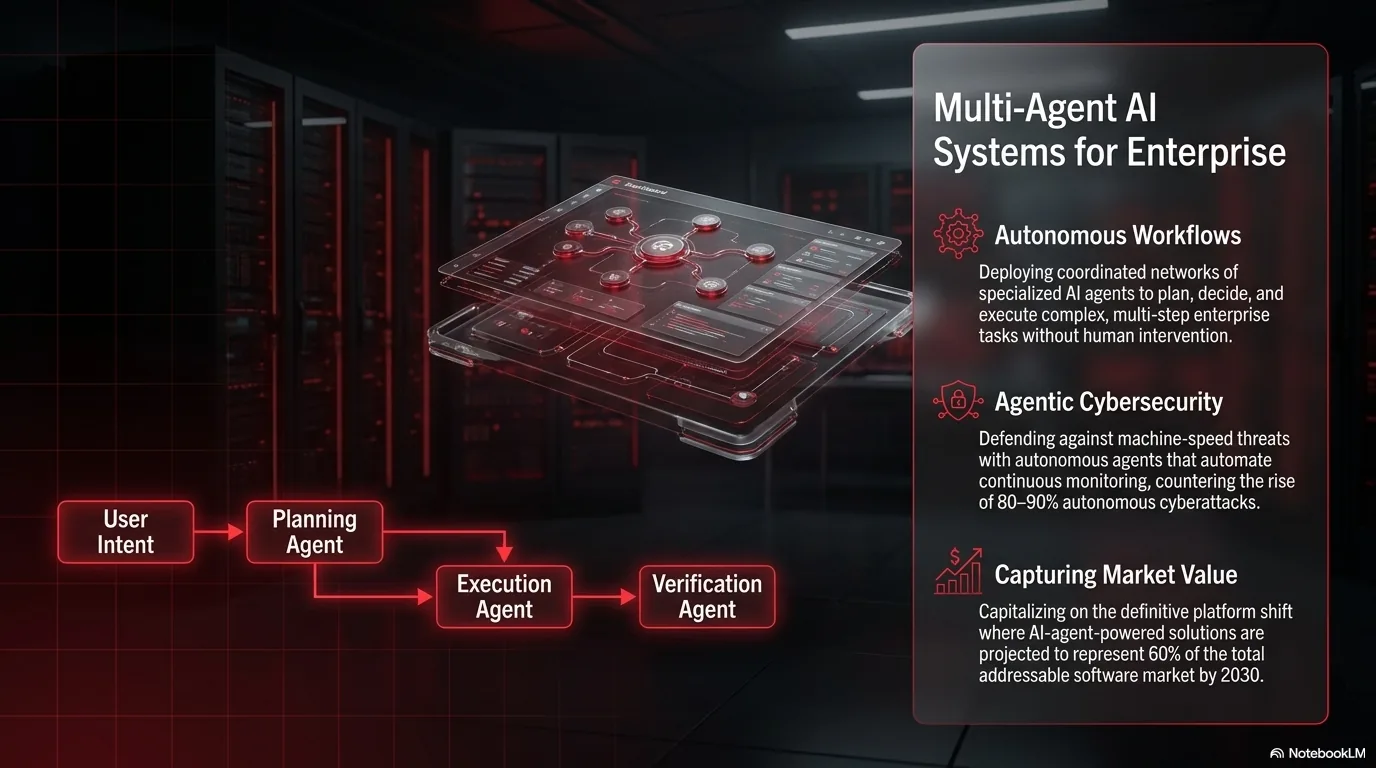
Agent specialization - Instead of one model trying to do everything, dedicated agents handle specific tasks: a research agent that retrieves and synthesizes information, an analyst agent that applies domain-specific reasoning, a quality agent that reviews outputs against defined criteria, and an orchestrator that manages the flow.
Orchestration frameworks - Tools like CrewAI and LangGraph provide the scaffolding for agent coordination: defining agent roles, managing state between steps, handling failures and retries, and producing structured final outputs.
Tool use and function calling - Each agent can use specific tools: database queries, API calls, document retrieval, web search. The orchestrator decides which agent uses which tool at each step.
Human-in-the-loop integration - Multi-agent workflows can include human review checkpoints at critical decision points, combining AI speed with human judgment where it matters.
Parallelization - Some workflows can run agent tasks in parallel (e.g., researching multiple topics simultaneously), dramatically reducing total processing time.
Multi-agent systems are coordination infrastructure. The architecture is the agent; the LLMs are the workers.
Real-World Example
A consulting firm built a multi-agent system for competitive intelligence reporting. The workflow involved:
- Research agent: Query multiple internal and external data sources for competitor activity
- Analysis agent: Apply structured frameworks to raw data
- Synthesis agent: Combine findings into a coherent narrative
- QA agent: Check factual consistency and flag gaps
- Output agent: Format for different audiences (executive summary, detailed report, slide deck bullets)
Previously, this report took an analyst 6-8 hours. The multi-agent system produced a draft in under 20 minutes, with the analyst reviewing and refining rather than researching and writing.
What This Looks Like as a Workshop
Multi-agent workshops are more technically complex than single-use-case prototypes. The workshop focuses on mapping the workflow, defining agent responsibilities, and building a working prototype with 2-3 agents before scaling.
Tools commonly used: CrewAI, LangGraph, Amazon Bedrock (as the underlying model provider), and AWS Lambda for agent execution. The architecture is designed for production readiness from the start.