AI for Manufacturing Quality Inspection
The Problem
Manufacturing quality is one of the AI categories with the longest track record and the largest gap between pilots and production. Computer vision for defect detection has been demonstrated since the 2010s. The pilots run well. The production deployments stall.
The pattern is recognizable. A vendor proposes an AI inspection system. The pilot is run on a controlled sample with consistent lighting, fixed camera angles, and a balanced set of defect examples. Accuracy is high. The factory floor turns out to be a different environment - lighting changes through the day, parts arrive in different orientations, the defect distribution does not match the training set, and the model that worked on the demo bench fails on the line. The line operators stop trusting it. The system is decommissioned. The next vendor arrives with the same demo.
The deployments that work share a different set of properties. They are designed for the actual factory floor from the first prototype - not the demo bench. They include the operator as a designed-in participant, not as an interruption. They have a continuous learning loop so the model improves with the data the production line generates. And they are scoped around a specific defect class with measurable impact, not “AI quality inspection” as a general capability.
How AI Solves It
Defect detection with calibrated confidence - Modern vision models can detect specific defect classes with high reliability under controlled conditions. The production discipline is to maintain that reliability under the line’s actual conditions - varying lighting, occlusion, part variation, and the long tail of defect types the training set may not have covered.
Dimensional and geometric analysis - For machined parts, assembled products, and packaging, AI-driven dimensional analysis surfaces deviations from spec with sub-millimeter accuracy under appropriate camera configurations. The output is structured measurement data, not a “pass/fail” abstraction.
Process anomaly detection - Beyond per-part inspection, AI can monitor the line itself - vibration patterns, temperature traces, cycle times, audio signatures - and surface anomalies that precede equipment failure or quality drift.
Operator-in-the-loop continuous learning - The line operator labels ambiguous cases through a simple interface. Those labels feed back into the training pipeline, and the model retrains on a defined cadence. The system improves as the line runs rather than degrading.
Defect localization and root cause hints - When a defect is detected, the AI surfaces not just the classification but the location, the surrounding context, and (where the pattern is well-established) a hint at the likely root cause - a tooling issue, a material lot variation, an upstream process drift.
Edge inference and air-gapped operation - Production manufacturing environments often require inference on-premises, sometimes air-gapped from the corporate network. AI inspection systems are deployed to edge devices (NVIDIA Jetson, AWS Snow Family, or industrial gateways) with model updates synchronized through a controlled deployment pipeline.
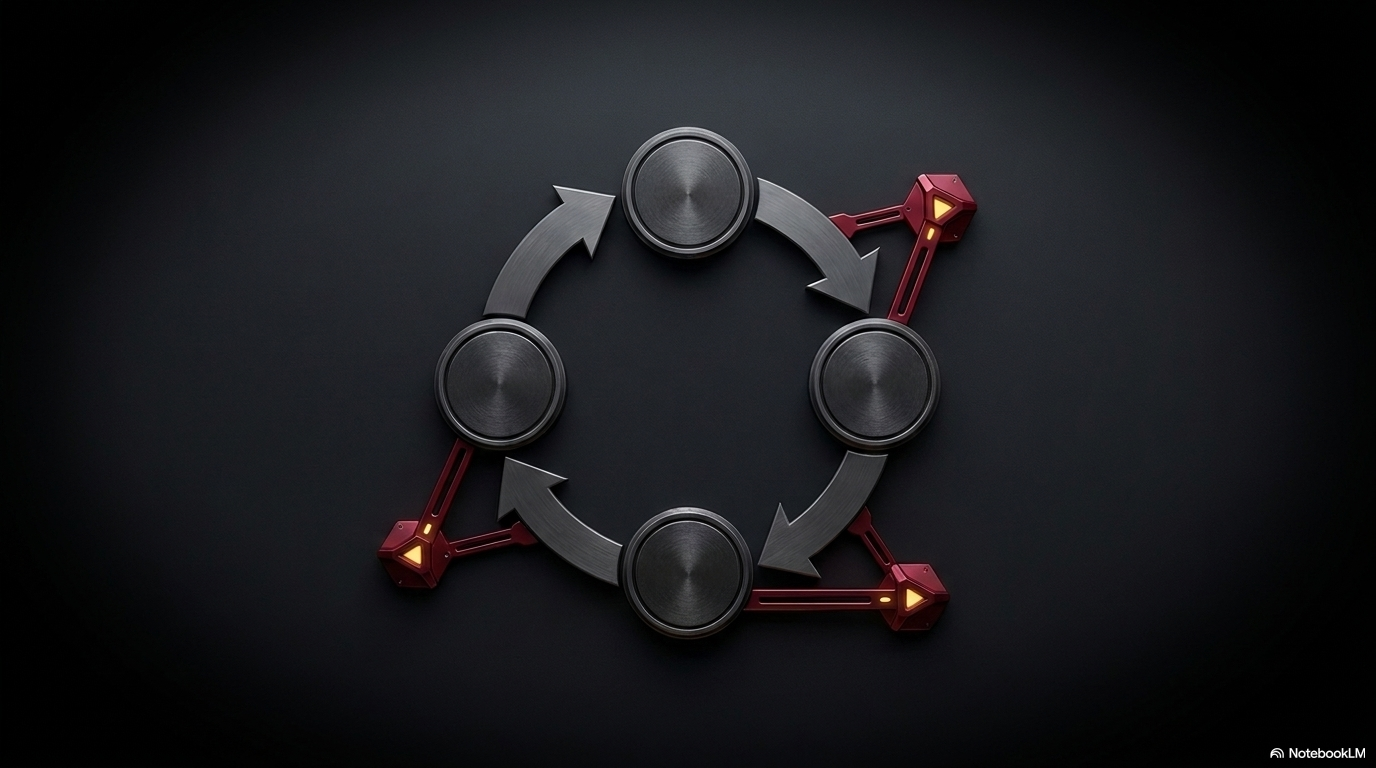
Production AI on the line works when the operator is a designed-in participant, not an interruption to the workflow.
Real-World Example
An industrial component manufacturer ran four production lines, each producing approximately 4,800 parts per shift. Quality inspection was a combination of automated dimensional checks and manual visual inspection by line operators. Reported defect rates per line varied between 0.6% and 1.4%, with internal estimates suggesting the actual escape rate (defects that reached the customer) was higher because operator inspection consistency varied across shifts.
The intervention was scoped to one defect class on one line as a proof, with the architecture designed for rollout across the four lines:
- A vision system was installed in-line with the existing inspection station, capturing every part at the same point in the process
- A defect classification model was trained on operator-labeled examples covering both the formal defect categories and the ambiguous cases that operators historically had to call themselves
- Detected defects were routed to the operator’s screen with the captured image, the model’s classification, and the confidence level
- Ambiguous cases (calibrated low-confidence) were flagged for the operator to label, feeding back into the training pipeline
- All inspection results were logged with the process telemetry from the line for downstream analysis
After eight weeks on the pilot line: reported defect rate increased to 1.9% - because the system was catching the defects that operator inspection had been missing. Customer-reported escape defects on the pilot line dropped by 73% over the following quarter. Operators reported that the AI-assisted workflow was easier than the previous all-manual workflow, because the ambiguous cases were the ones they had been struggling with and the system gave them a structured second opinion. The rollout to the remaining three lines proceeded over the following two quarters.
What This Looks Like as a Workshop
A manufacturing AI workshop starts on the line. We walk the production process, look at the current inspection points, understand the defect categories that matter, and identify the constraints (lighting, throughput, network connectivity, regulatory environment). The Discovery Workshop identifies which defect classes are tractable for a first deployment and which require longer data collection before they become workable.
The prototype usually targets a single defect class on a single line with a measurable economic impact - either escape rate reduction, scrap reduction, or operator-time reallocation. AWS services commonly used: Amazon SageMaker (for model training and the labeling workflows), Amazon Rekognition Custom Labels for the simpler classification cases, AWS IoT Greengrass and Snow Family for the edge deployment, AWS Lake Formation for the labeled data lake, and Amazon Lookout for Equipment for the process anomaly side where appropriate.
The Concept Workshop produces the edge architecture and the data labeling pipeline. The Prototype Workshop captures real line data, trains a model against your specific defect classes, and demonstrates the inspection workflow with your operators on a sample of real production.
If your manufacturing operation has been told AI inspection is the answer but the previous pilots have not scaled, book a free Idea Call. We can review where the pilots failed and what a production-ready architecture would look like for your line.