
AI Customer Support Automation
The Problem
Customer support is where most organizations make their first AI mistake. The pattern is familiar: a chatbot is bolted onto the homepage, the marketing team celebrates “AI-powered support,” and within six weeks every customer interaction begins with the user typing “speak to a human.” Volume to live agents goes up. CSAT goes down. The chatbot is quietly hidden, and the support team is now even more skeptical of the next AI initiative.
The failure mode is almost always the same: the system was designed to deflect tickets, not to resolve them. It cannot read the customer’s actual problem, it cannot access the systems that hold the answer, and it cannot escalate cleanly. The result is friction at a moment when the customer was already frustrated.
Done correctly, AI in customer support is one of the most measurable wins in any enterprise. It does not replace agents. It removes the parts of agent work that nobody enjoys - ticket triage, knowledge lookup, response drafting, and routing - so agents can spend their time on the cases that need a human.
How AI Solves It
Intent classification and triage - Incoming tickets are classified by intent, urgency, customer tier, and routing target in milliseconds. Misrouted tickets - one of the largest hidden costs in support operations - drop to near zero.
Knowledge retrieval grounded in your documentation - When a customer asks “how do I export to CSV?” the system retrieves the answer from your real product documentation, not from a generic LLM’s training data. The agent (or the customer, if the policy allows direct response) sees a draft answer with the source linked.
Conversation summarization - Long ticket threads, chat transcripts, and email chains are summarized for the receiving agent. The five-minute “read the history” gap at the start of every escalation disappears.
Draft response generation - For routine tickets, the AI drafts a response in your brand voice, grounded in your knowledge base, with the agent reviewing and sending. Average handle time drops by 30-50% on the ticket categories where this is appropriate.
Sentiment and escalation detection - Tickets where the customer is escalating frustration are flagged for senior agent attention before the next reply, not after the customer churns.
Quality assurance at scale - Every closed ticket can be reviewed for quality, brand voice adherence, and process compliance. Manual QA covers 2-5% of tickets; AI-assisted QA covers 100%.
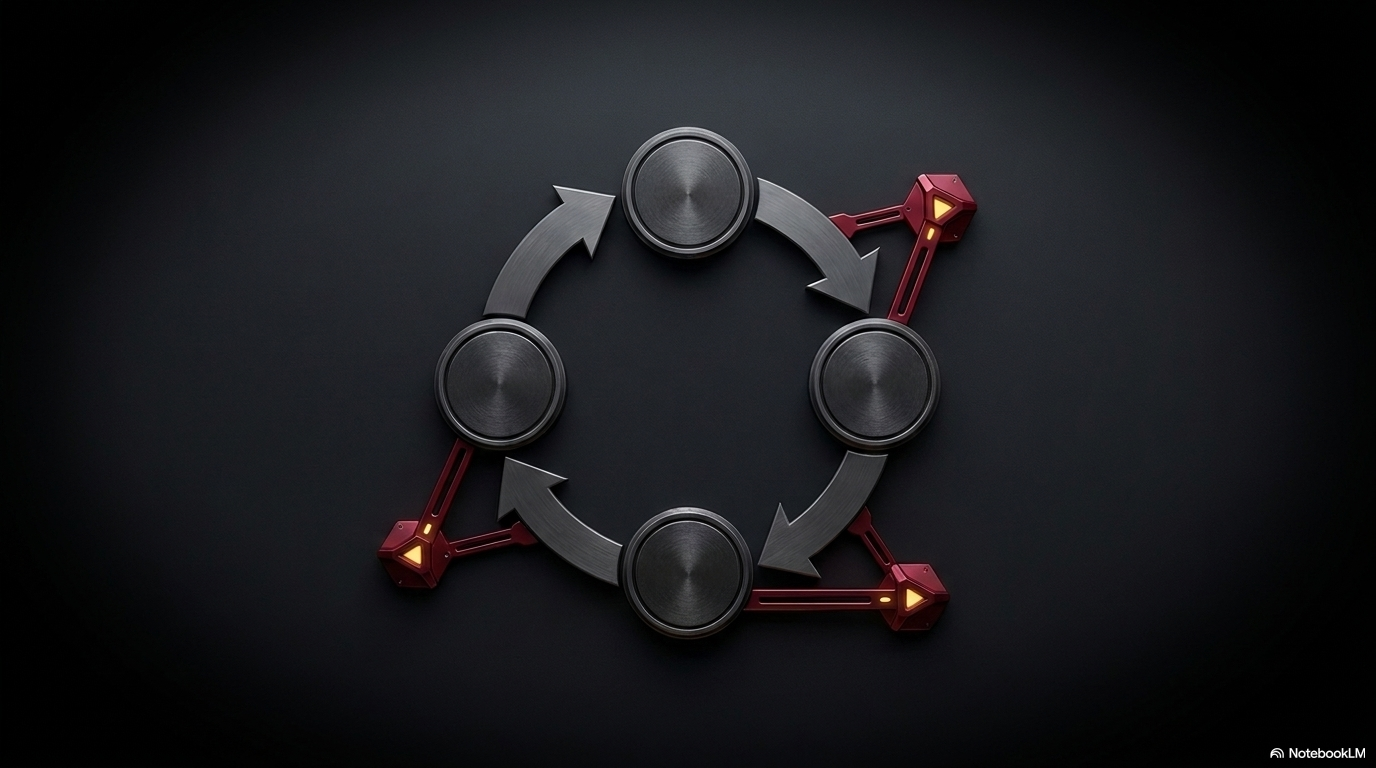
Closed-loop ticket workflow. The AI handles preparation. The agent handles the conversation.
Real-World Example
A B2B SaaS company with approximately 35,000 active accounts and a support team of 22 agents handled around 4,500 tickets per month. The pre-existing chatbot deflected 11% of tickets but had a CSAT of 2.1 out of 5 - lower than the average agent CSAT of 4.4.
The redesigned system was deliberately not customer-facing. Instead:
- All incoming tickets were classified, prioritized, and routed automatically
- Each ticket arrived in an agent’s queue with a summary, a suggested response, and the linked knowledge base articles
- Sentiment-flagged tickets were routed to senior agents before they escalated to cancellations
- Closed tickets were scored against a quality rubric in the background
Three months in production: average handle time fell by 38%, first-contact resolution rose from 62% to 79%, agent CSAT rose to 4.6 (the assistance made the job better, not worse), and customer CSAT rose to 4.5. Total tickets resolved per agent per day increased by 41%.
Notably, the chatbot was removed entirely. AI was used to make human support better, not to replace it.
What This Looks Like as a Workshop
A customer support workshop starts with ticket data. We look at your real ticket volume, current routing accuracy, time per ticket type, and where the friction sits. The Discovery Workshop produces a prioritized list of high-impact intervention points (triage accuracy, response drafting, summarization, QA).
The prototype usually targets the highest-volume ticket category first - typically a category where 40-60% of tickets follow a predictable pattern. AWS services commonly used: Amazon Bedrock (for classification, summarization, and generation), Amazon Comprehend (for sentiment and intent), Amazon Connect or your existing helpdesk platform (Zendesk, Intercom, Freshdesk) as the integration target, and Bedrock Guardrails for brand voice and safety constraints.
The Concept Workshop produces the integration architecture and the human-in-the-loop policy. The Prototype Workshop builds a working pipeline on a sample of your real tickets, with measurable accuracy and time-saved metrics.
If your support function is already at scale and AI feels like the obvious next investment, book a free Idea Call. We can review where the highest-leverage entry point sits for your specific volume and stack.